


🍁Happy Sunday, dear 338Canada readers,
There was no shortage of interesting data released last week in Canadian politics. Federal polls were all over the place (sort of), Alberta's referendum took centre stage, and the B.C. Conservatives have taken a clear lead over the NDP — in the aggregate.
Oh, and four months from today, Quebec will have elected a new National Assembly — yet we still don't know which electoral map will be used. A complete mess by any measure, and a predictable outcome whenever politicians interfere with independent commissions tasked with redrawing electoral boundaries. (Also looking at you, Alberta.)
Let's begin with federal numbers, then head west.
The two usual federal trackers from Nanos Research and Liaison Strategies were released early in the week, and both painted a similar picture: Liberals in the low 40s, Conservatives in the low 30s, and the NDP in the mid-teens.
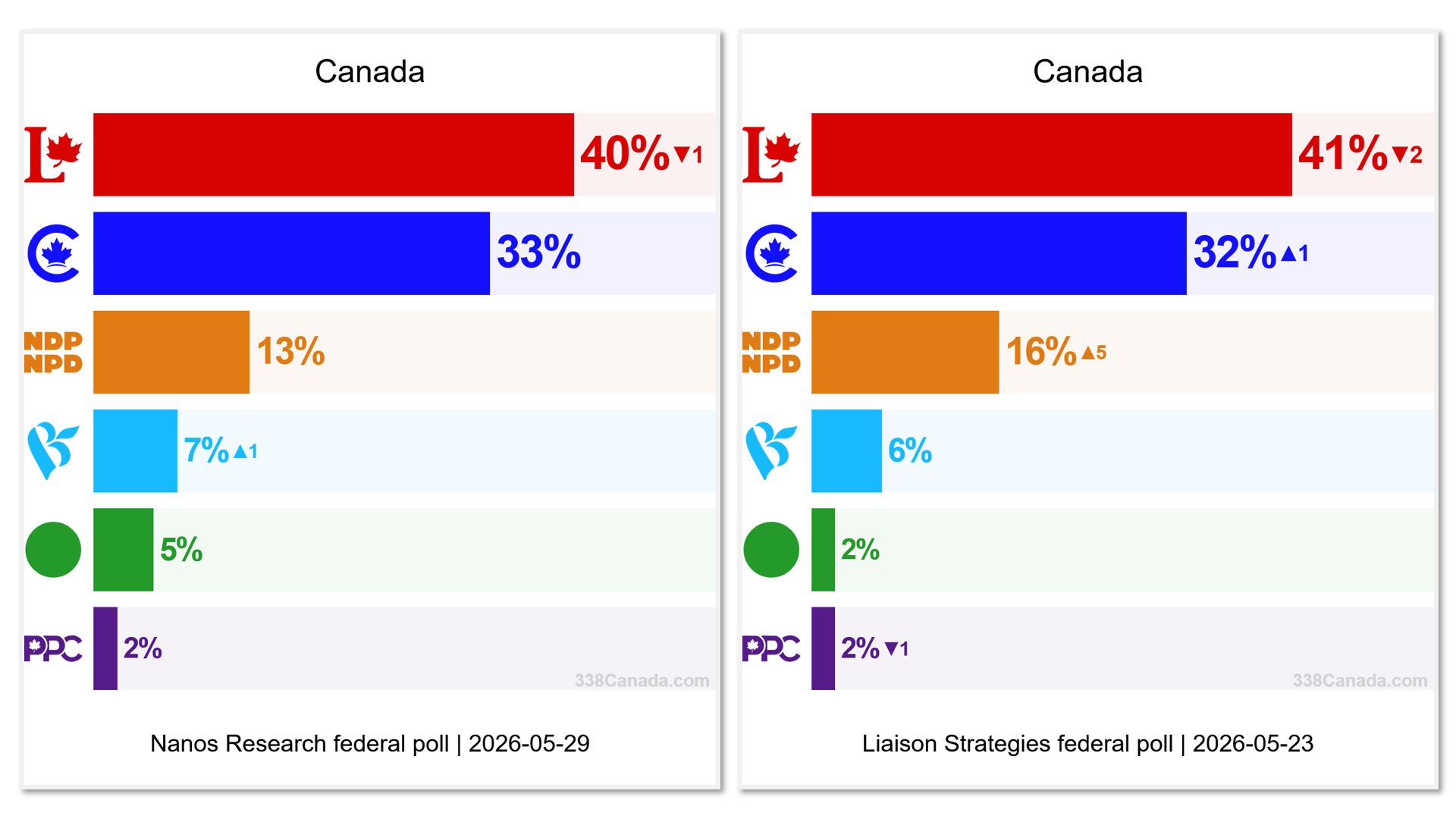
The big change from the previous week was, unquestionably, the NDP. Whereas Nanos has measured the party in low double-digits for some time now, Liaison had not, and its 16% figure appeared to come out of nowhere.
Could it be that Avi Lewis's NDP is finally winning back support from left-of-centre voters who lent their votes to the Liberals last year? The narrative was easy to draw, as 16% is much closer to the NDP's historical average than the unusually weak 6% to 9% range measured through much of the past 15 months.
Alas…
… just as we thought we had identified a modest new trend in Canadian public opinion, a new federal poll from Léger took a swing at the whole narrative.
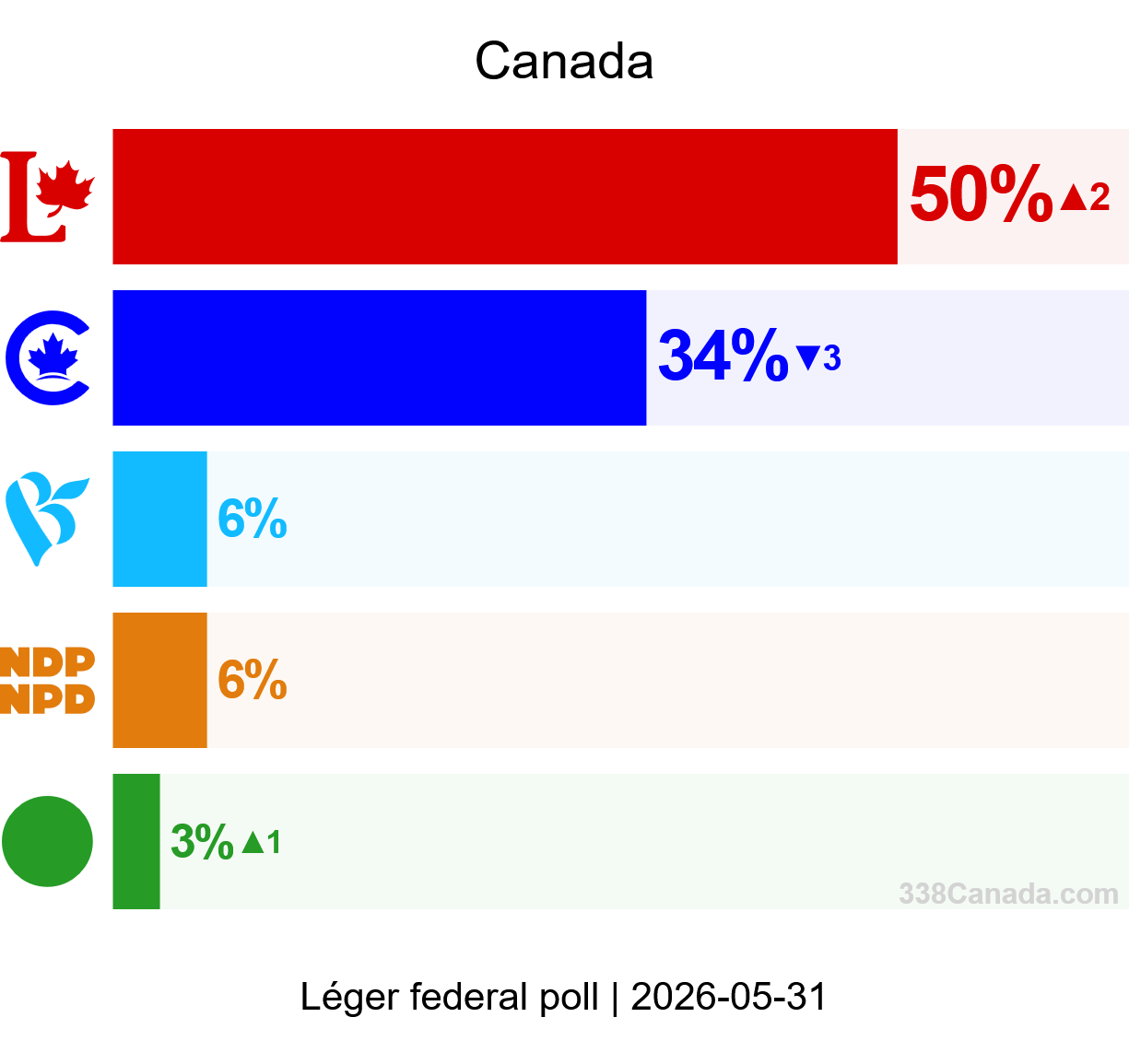
According to Léger, no, actually, the Liberals are stronger than ever at 50% nationally (!), and the NDP remains stuck at 6% — tied with the Bloc Québécois.
So, is Léger the outlier?
That depends on semantics.
Compared to recent federal polls from Léger, this latest survey shows continuity more than any dramatic movement. In fact, Léger’s monthly federal numbers have been remarkably stable since January, even if that 50% result is the highest Liberal score recorded by any polling firm this spring.
From a purely statistical point of view, this poll is not an outlier relative to Léger's own recent data.
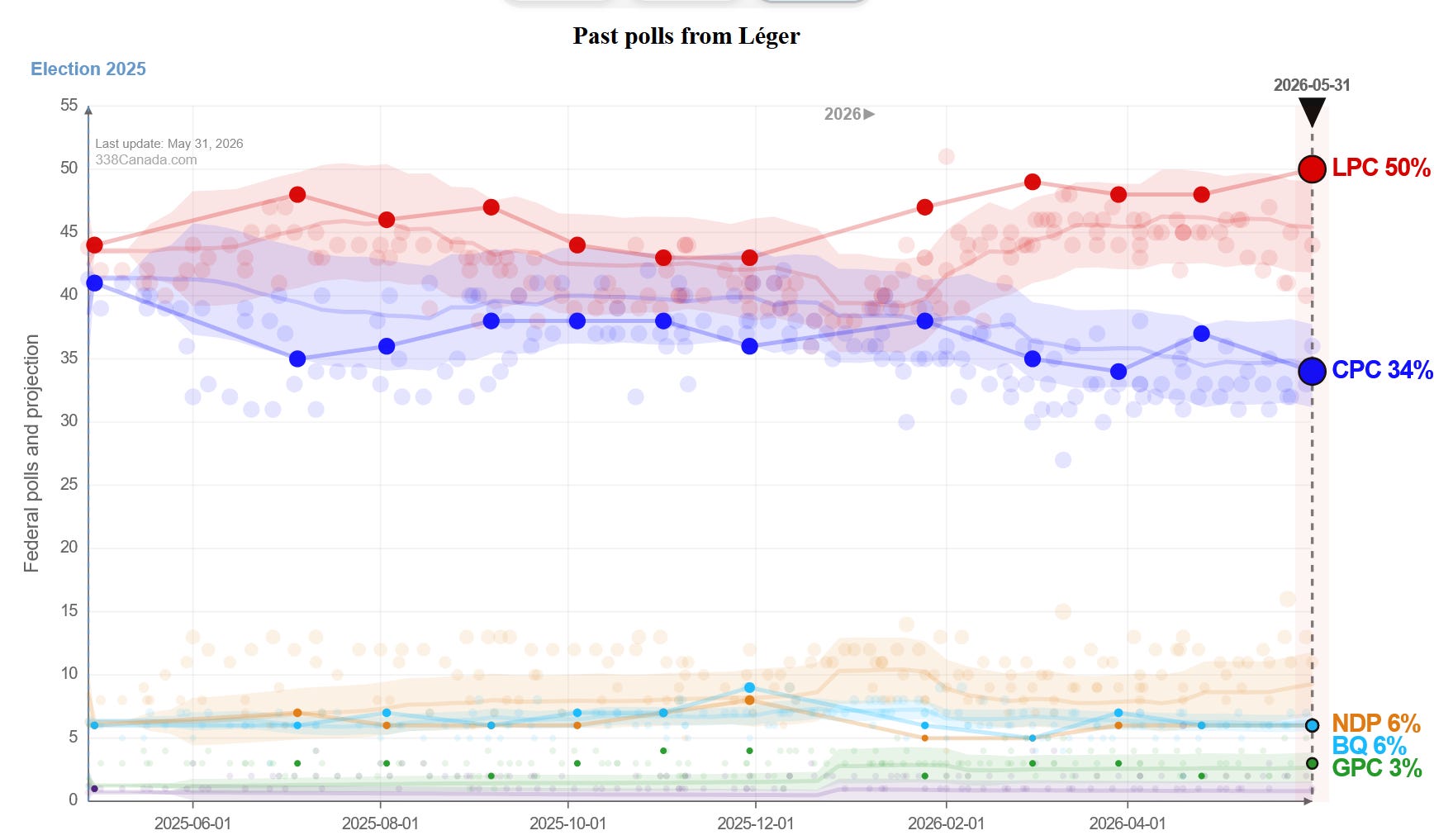
The challenge is that Léger has consistently measured higher Liberal support than the broader polling average since the 2025 election. Prior to that election, we had detected no meaningful Liberal-friendly house effect from Léger. And we looked.
So what changed?
Could Léger’s panel be picking up something other firms are missing? It’s certainly possible. But it’s also possible that the truth lies somewhere between Léger’s numbers and those of the federal trackers.
Whatever the explanation, it is difficult to simply dismiss Léger’s findings. The firm has built an exceptional track record over the past decade.
Read Léger’s full report here.
New federal numbers from Abacus Data were released this morning, and they landed somewhere in the middle — usually not a bad place to be.
Abacus measures the Liberals at 44%, the Conservatives at 36%, and the NDP at 11%.
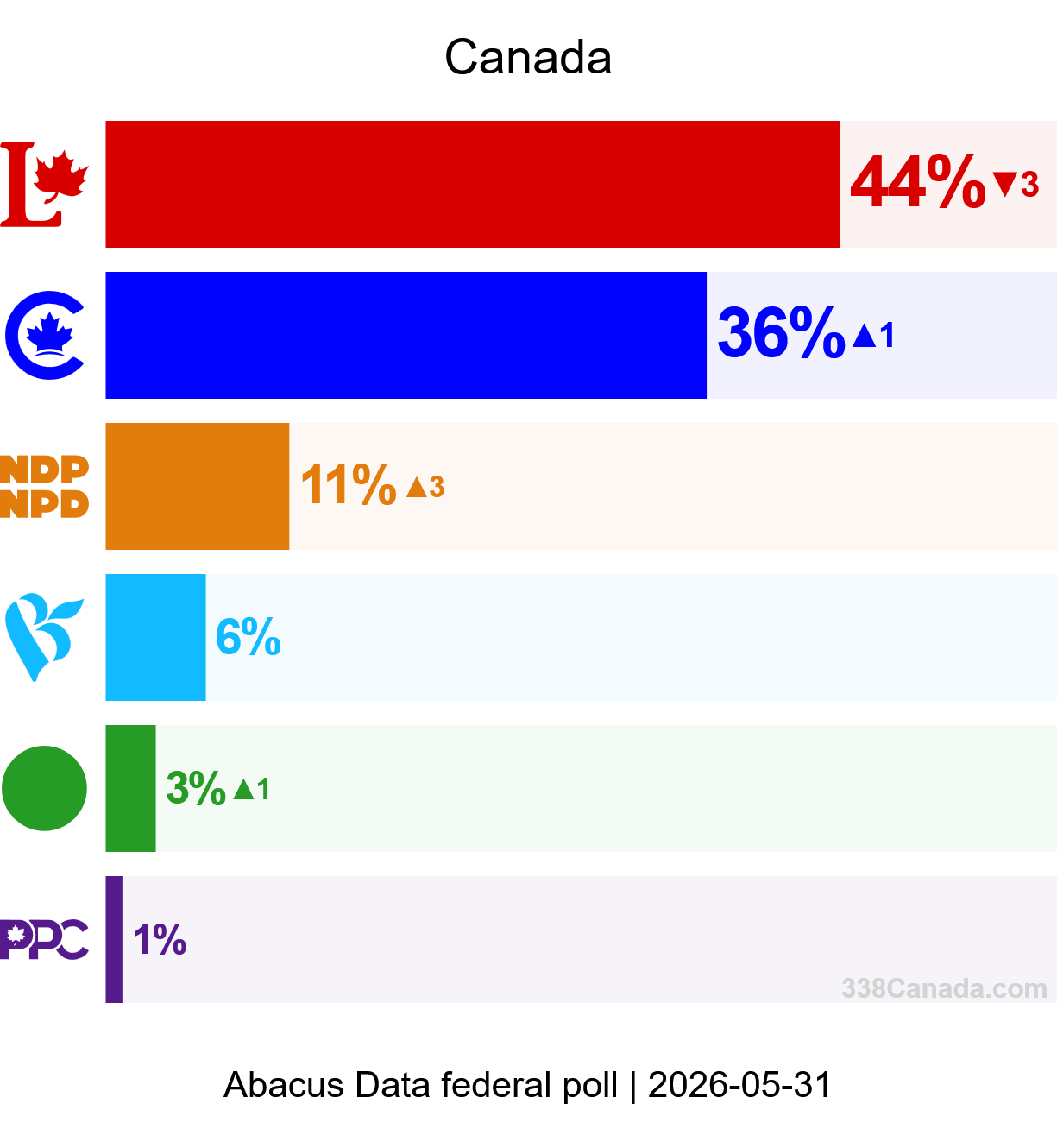
Yet while voting intentions remain favourable to the Liberals, Abacus detects a gradual cooling in public sentiment toward the federal government.
Approval now stands at 52%, down five points since mid-May, while disapproval climbs three points to 31%. The government's net approval rating remains a healthy +21, a figure many governments would envy, but it is nevertheless down from +28 just three weeks ago.
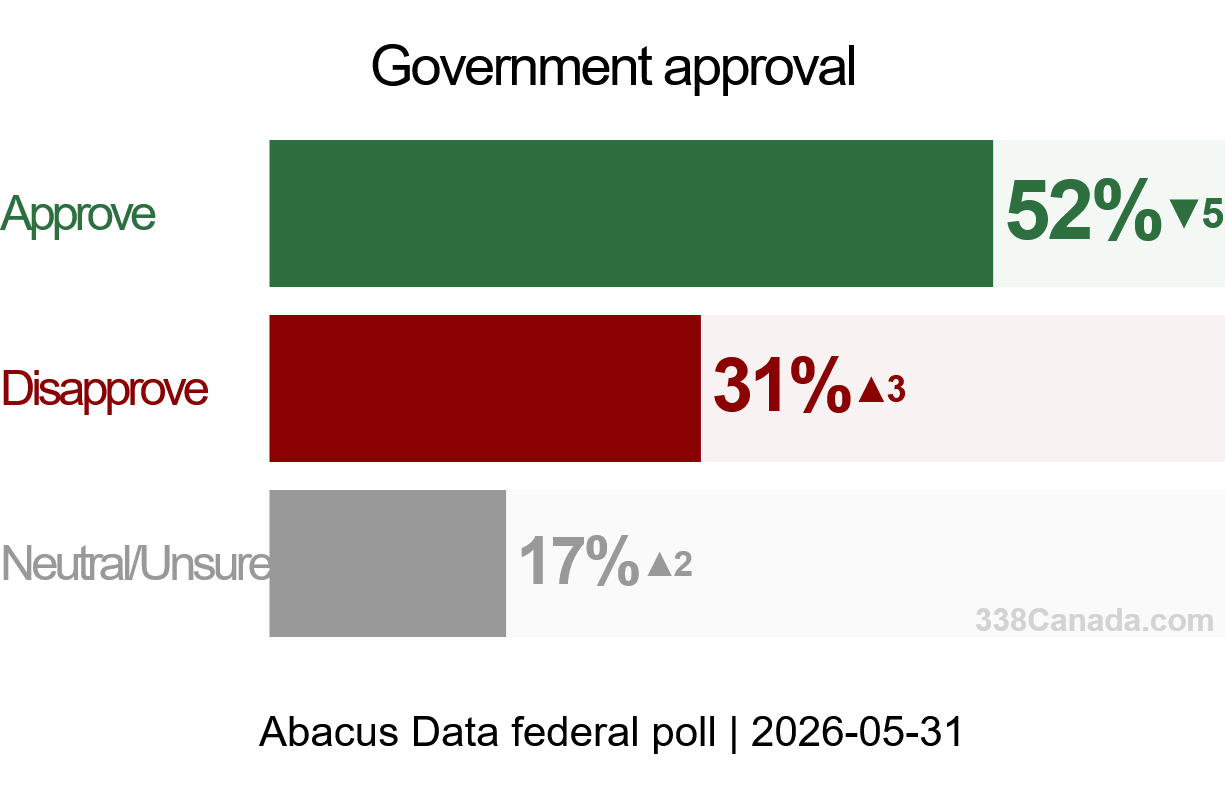
See Abacus’ latest numbers here, and the complete report from David Coletto here.
Since mid-May, Liberal support has ranged from 40% to 50% nationally — a ten-point spread that naturally stretches our level of comfort.
The NDP has climbed into double-digits according to every active polling firm except Léger.
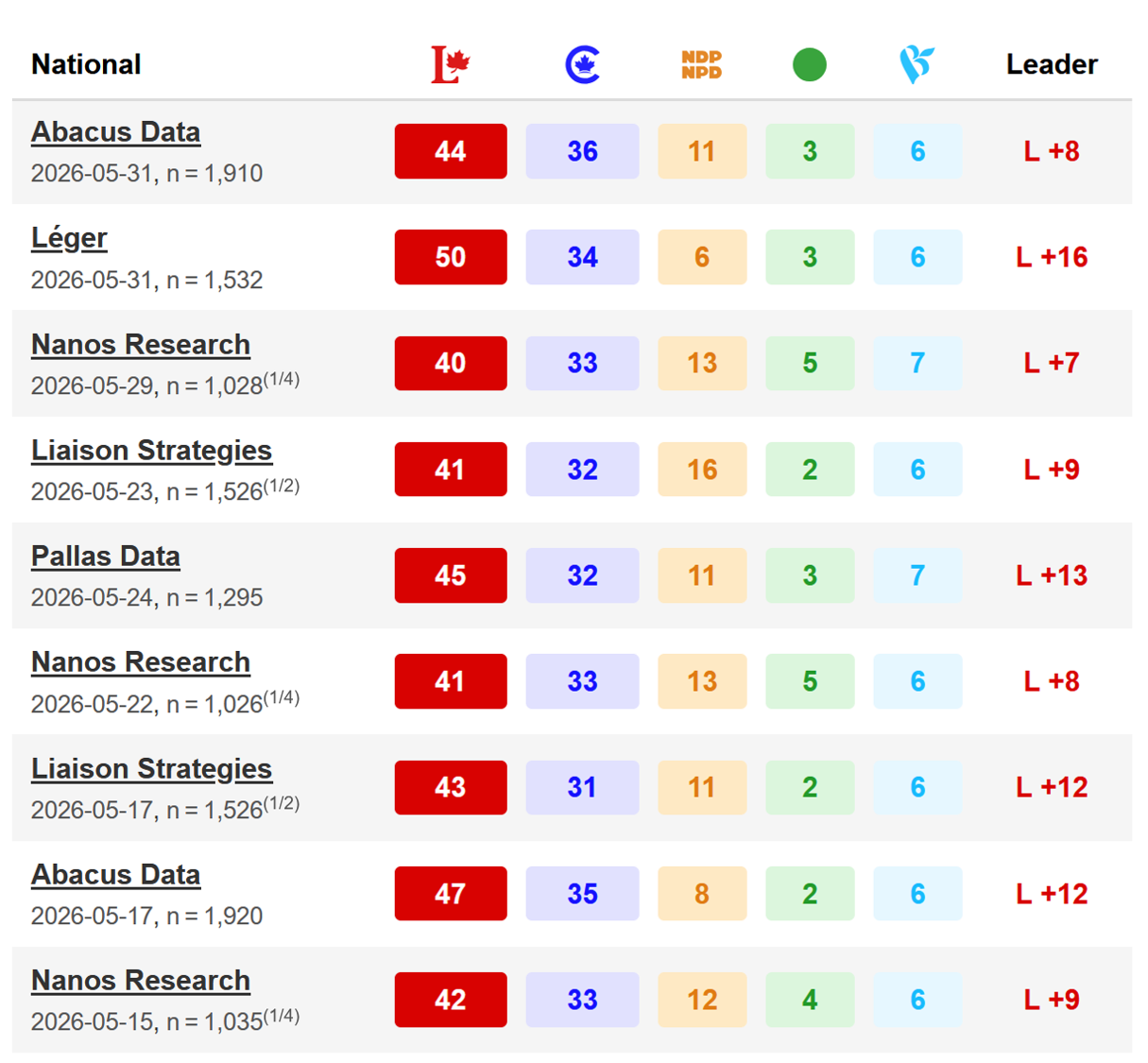
As for the Conservatives, there is considerably more agreement. Recent polls place the party between 31% and 36%, a relatively healthy range.
Let’s update the 338Canada federal projection.
📊Enjoy independent, data-driven analysis?
🍁Join thousands of readers supporting 338Canada.
