


The shine may be coming off Quebec Premier Christine Fréchette.
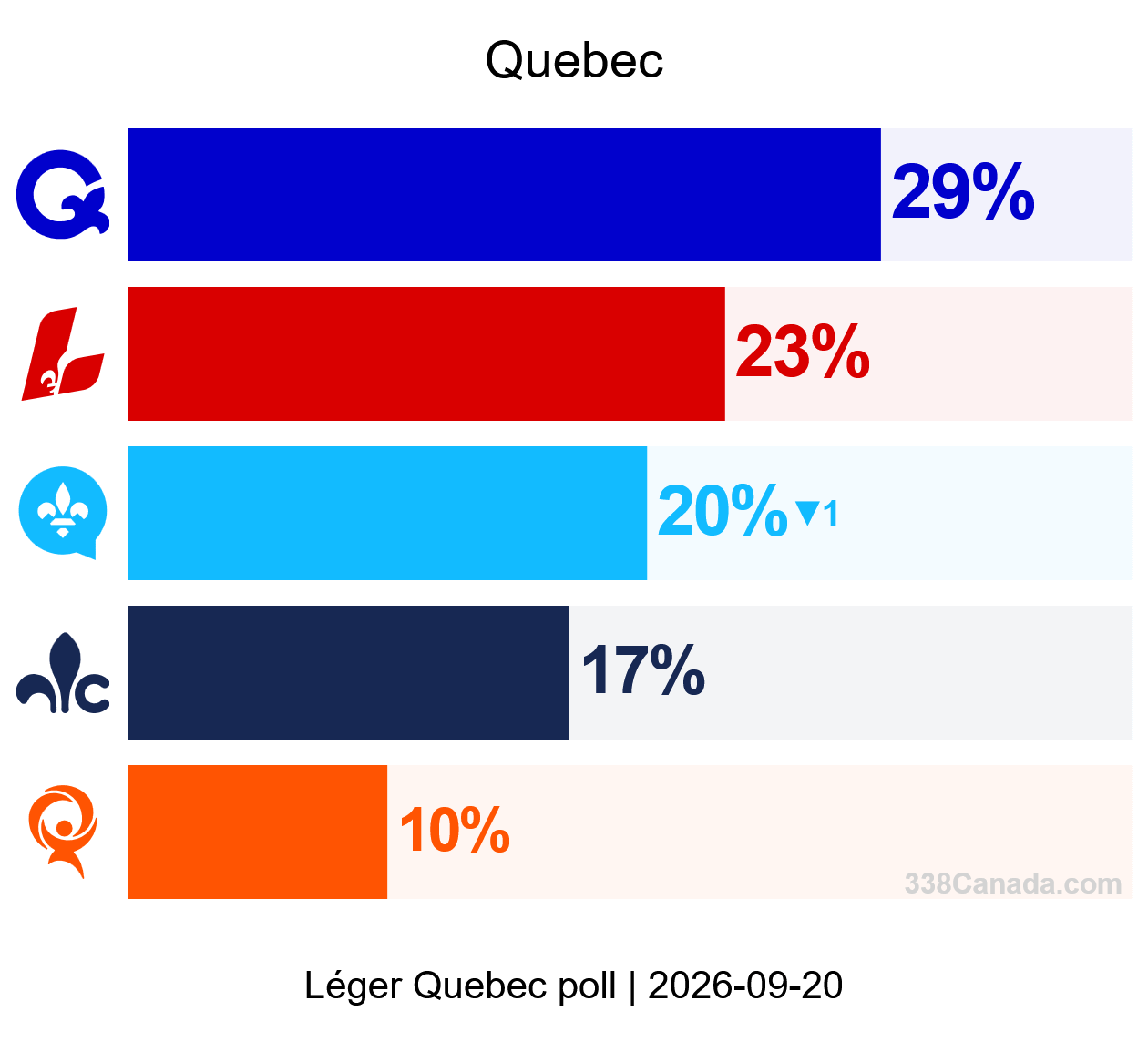
A new Léger poll released Tuesday morning shows the Parti Québécois holding steady at — you guessed it — 29 per cent among decided and leaning voters, six points ahead of the Quebec Liberals at 23 per cent. Fréchette’s CAQ has slipped to third place with 20 per cent, followed by the Conservatives at 17 per cent and Québec solidaire at 10 per cent.
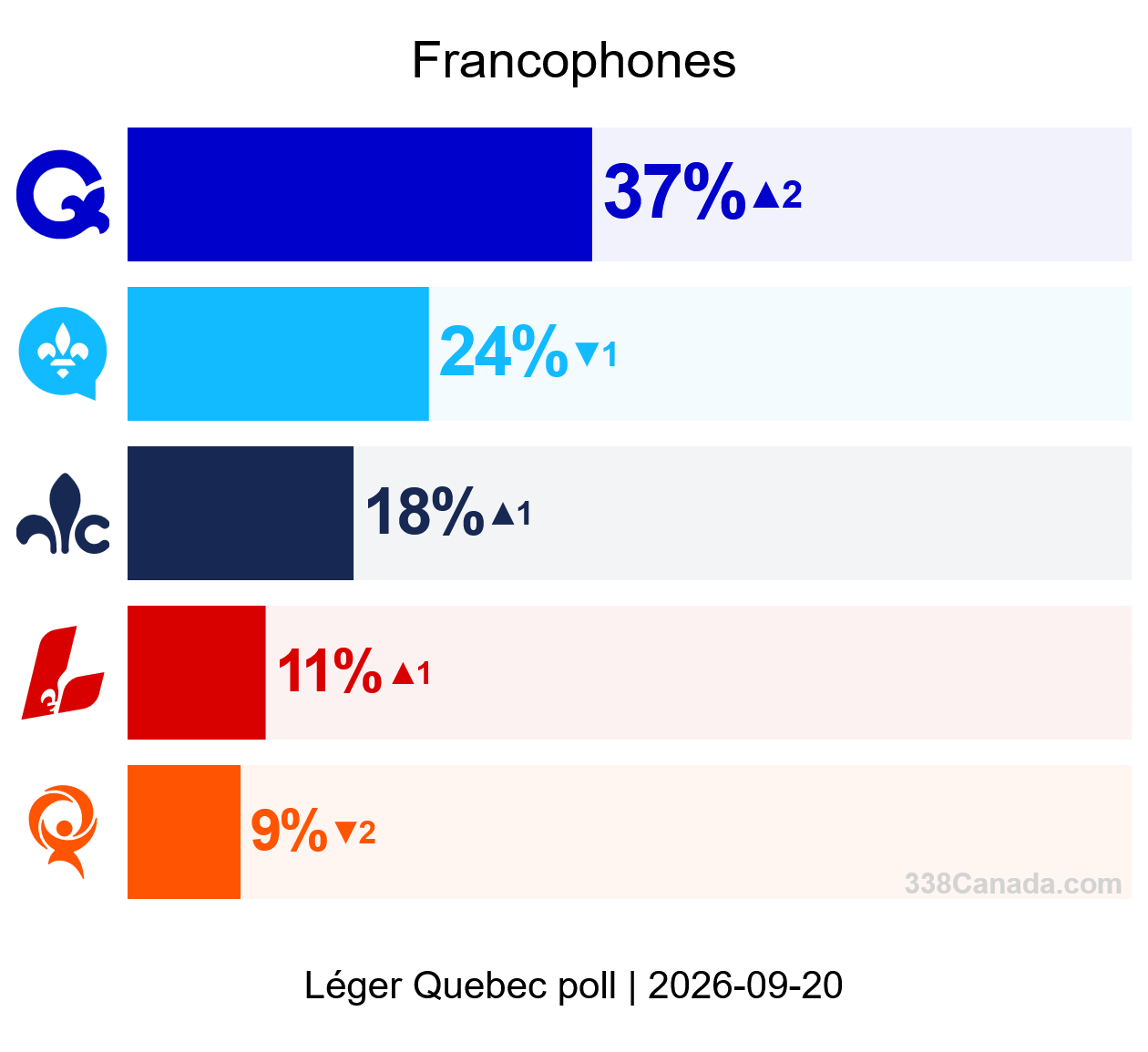
Among francophone voters, the PQ has widened its lead: 37 per cent for the PQ, 24 per cent for the CAQ and 18 per cent for the Conservatives.
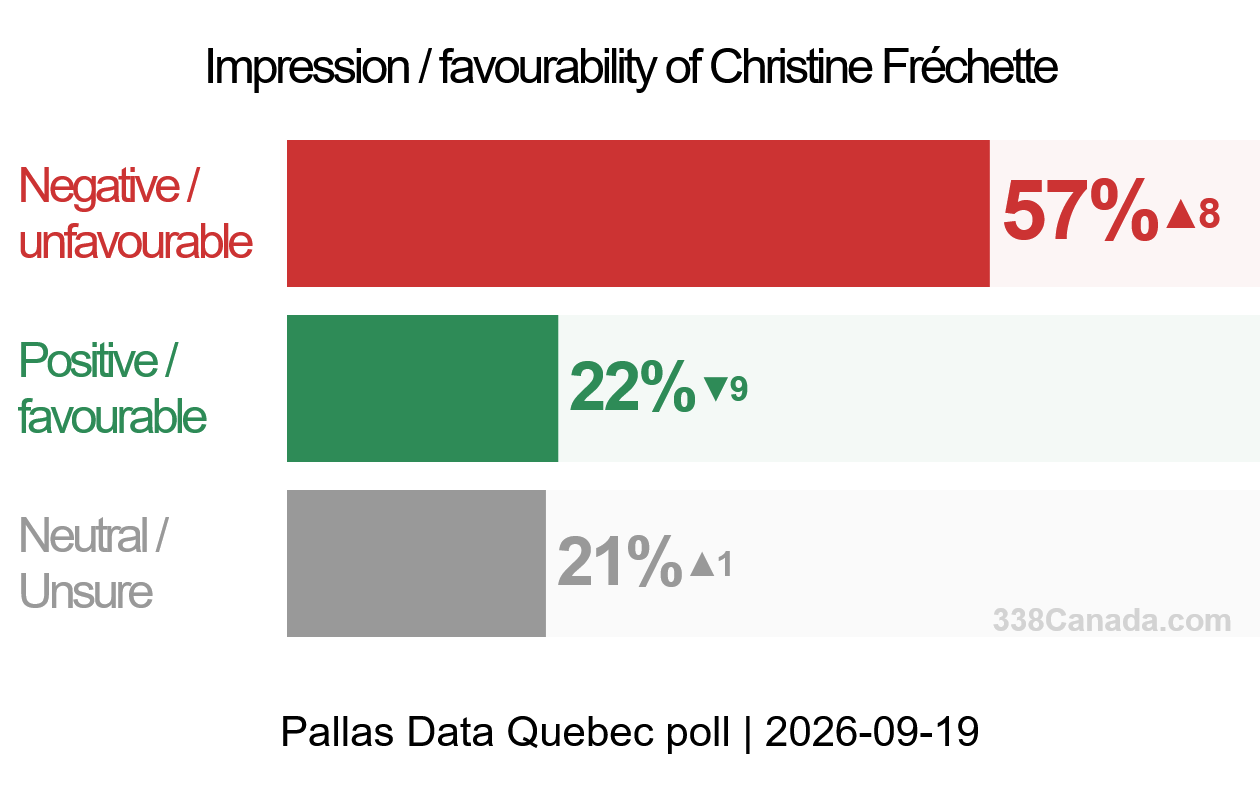
More concerning for Fréchette are her personal numbers.
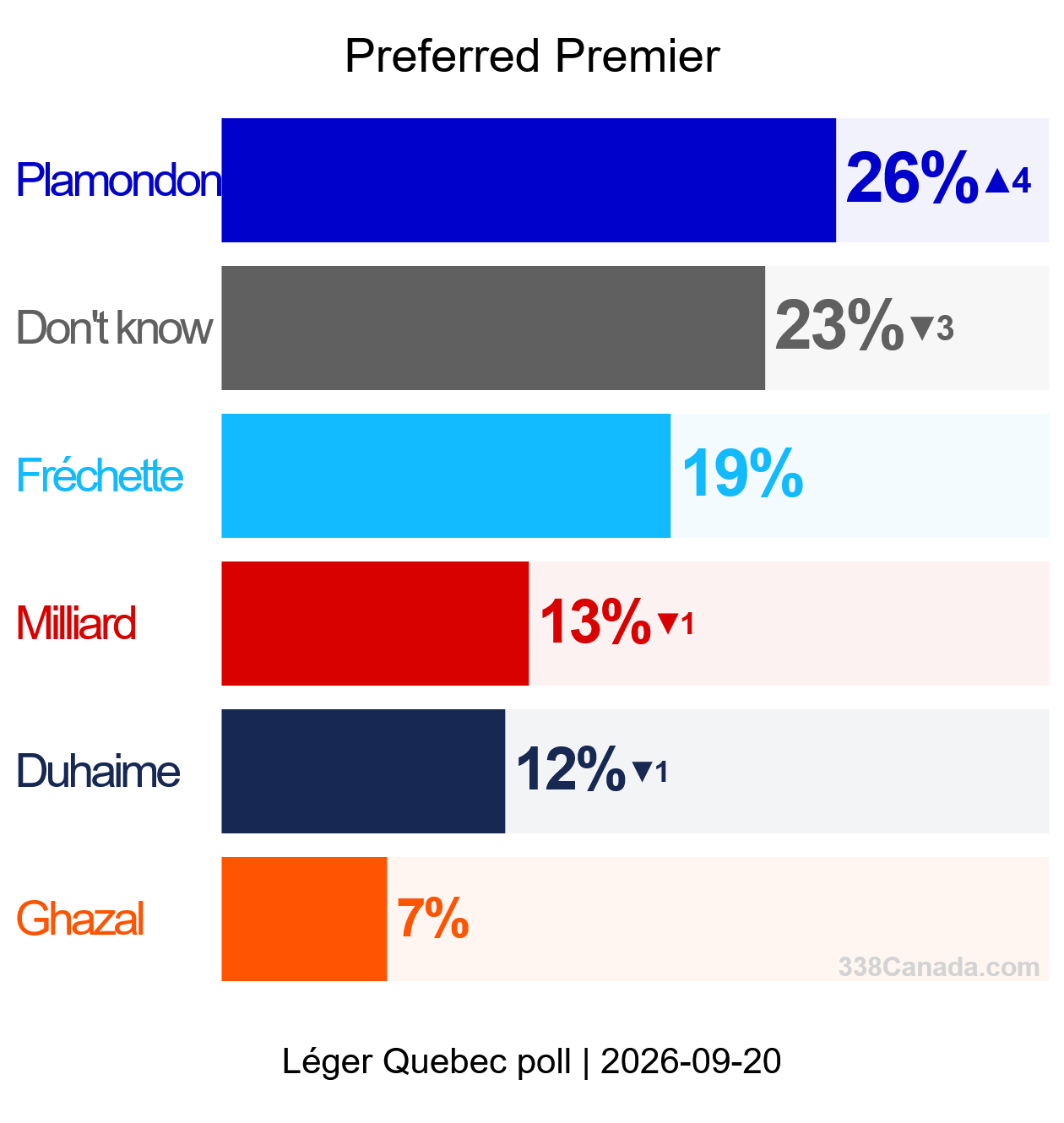
Asked who would make the best premier, 26 per cent of respondents chose PQ leader Paul St-Pierre Plamondon, up four points from last week. Fréchette has fallen to 19 per cent, a four-point drop since early September.
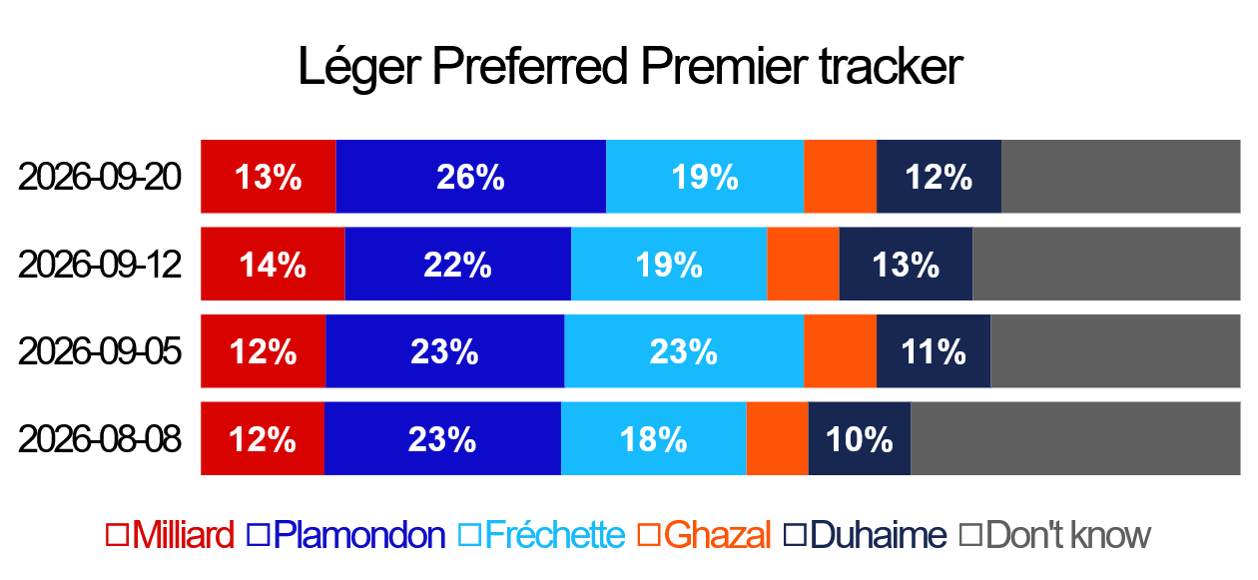
Those numbers reinforce a trend we saw in Monday’s Pallas Data poll: the so-called “Fréchette effect” that helped lift the CAQ earlier in the campaign appears to be losing steam.
And that could have dramatic consequences in the seat count.
The CAQ finds itself in a particularly precarious position under Quebec’s first-past-the-post system. Its support is spread across a few dozens competitive ridings rather than concentrated in a regional strongholds. As I wrote last week in L’actualité magazine, within the CAQ’s current range of plausible outcomes, every percentage point gained or lost translates into an average swing of roughly six seats.
And in our electoral system of First-past-the-post, finishing second everywhere doesn’t get you very far.
The PQ approaches majority territory
Here is where things get interesting.
Despite sitting at only 29 per cent in the 338Canada polling average, the PQ now holds a seven-point lead over the Quebec Liberals. With the non-PQ vote increasingly fragmented, that modest province-wide score translates remarkably efficiently into seats.
The latest 338Canada projection puts the PQ at an average of 62 seats, just two shy of the 64 required for a majority in Quebec’s 127-seat National Assembly. There remains considerable uncertainty, with the PQ’s projected range stretching from 40 to 77 seats.
